Best Lightweight Gaming Mouse (2026)
The best lightweight gaming mice of 2026, ranked by grams. From 54g flyweights to featherlight budget picks — solid shells and honeycomb, with pros, cons and a comparison table.
Weight is the one mouse spec you can actually feel the instant you pick it up. Drop from a 100g mouse to a 60g one and flicks land faster, micro-corrections get easier, and your wrist stops aching after long sessions. Unlike DPI or polling rate — numbers you'll never notice in real play — grams change how the mouse feels in your hand every single second. For a lot of players it's the single biggest upgrade they can make, and the cheapest way to feel like their aim suddenly got sharper.
The other good news: the honeycomb era is over. A few years ago the only way to get a mouse under 70g was to drill holes in it, which meant dust, flex and a shell you had to baby. In 2026 the best flyweights hit sub-60g with completely solid shells — no holes, no creak, no compromise. Honeycomb still exists, and it's often cheaper, but it's no longer the price of entry to lightweight.
Below are the best lightweight gaming mice, roughly ordered by how well they balance grams against everything else that matters. The quick answer:
- Lightest flagship: Razer Viper V3 Pro (~54g)
- Best all-round: Logitech G Pro X Superlight 2 (60g)
- Best value flyweight: Glorious Model O 2 Pro (~55g)
- Best budget: Razer Viper Mini (61g)
- Lightest ergonomic: Razer DeathAdder V3 Pro (~63g)
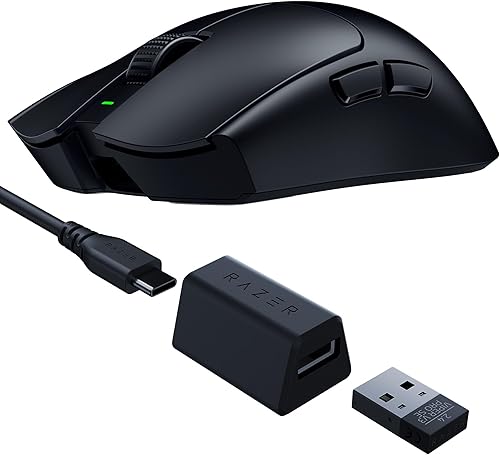
Razer Viper V3 Pro
Lightest flagship · ~54gThe lightest serious mouse you can buy, and it doesn't cut a single corner to get there — no holes, no flex, no compromise on the sensor or the wireless. If grams are your priority, this is the number.
- ~54g — about as light as a real mouse gets
- Solid shell, zero flex
- Elite sensor, optional 8K polling
- Wireless with no weight penalty
- Expensive
- No RGB
- Flat shape not for palm grippers
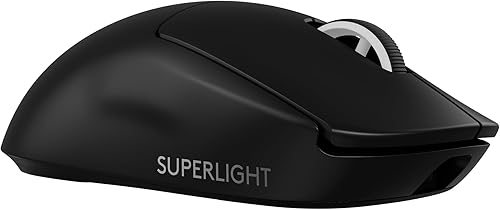
Logitech G Pro X Superlight 2
Best all-round · 60gSix grams heavier than the Viper, and worth it for most people. The shape suits nearly every hand and grip, the build is impeccable, and it's the safest lightweight recommendation there is.
- 60g with a rock-solid shell
- The most universally-liked shape in gaming
- Flawless LIGHTSPEED wireless, ~95h battery
- Fast hybrid switches
- Premium price
- No extra buttons
- No dock in box
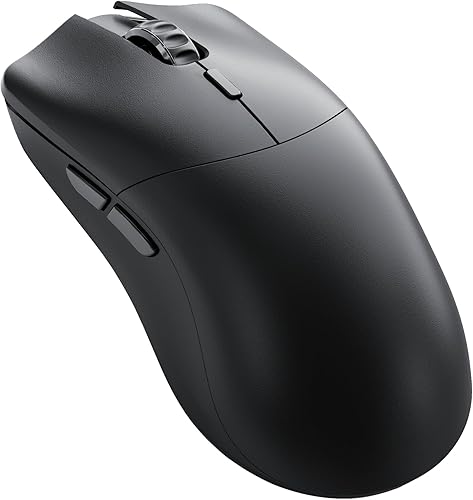
Glorious Model O 2 Pro
Best value flyweight · ~55gGlorious started the lightweight craze with holes; the O 2 Pro finishes the job without them. Sub-55g, flagship sensor, notably cheaper than the big two — the value king of flyweights.
- ~55g and now a solid shell (no holes)
- Flagship-grade sensor
- Long battery
- Meaningfully cheaper than Razer/Logitech
- Software less polished
- Fewer extras
- Suits claw/fingertip best
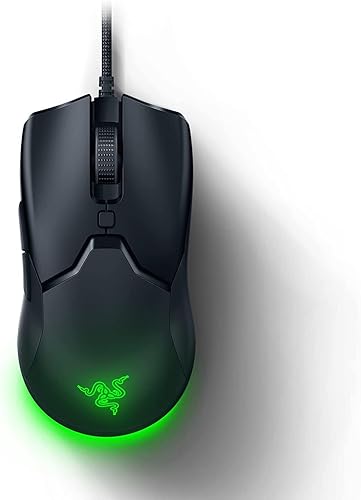
Razer Viper Mini
Lightest budget · 61gThe cheapest way to feel what lightweight is all about. 61 grams, snappy optical switches, and a price that makes it an easy first upgrade — as long as your hands aren't large.
- 61g for very little money
- Fast optical switches
- Great for small hands and claw grip
- Ambidextrous
- Wired
- Genuinely small
- No frills
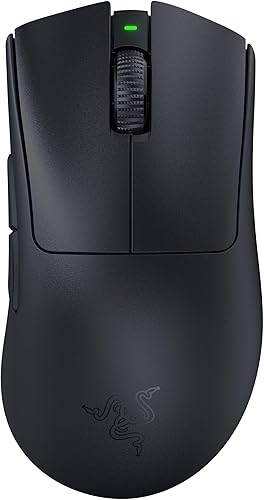
Razer DeathAdder V3 Pro
Lightest ergonomic · ~63gLightweight mice are almost always flat slabs. This is the exception — a proper tall, right-handed ergonomic hump at just ~63g. If comfort matters as much as grams, this is your mouse.
- The famous ergo shape at just ~63g
- Elite sensor and optical switches
- Comfortable for long sessions
- Long battery
- Right-handed only
- Premium price
- No extra buttons
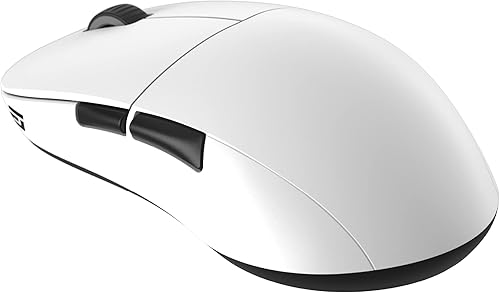
Endgame Gear XM2we
Enthusiast favourite · ~63gThe connoisseur's lightweight. It won't sell you on marketing — it just gets shape, weight, switches and glide exactly right, for less than the household names.
- ~63g with a widely-loved safe shape
- Excellent switches and glides
- Flagship feel at mid price
- Great build quality
- Lesser-known brand
- Minimal RGB
- Fewer buttons
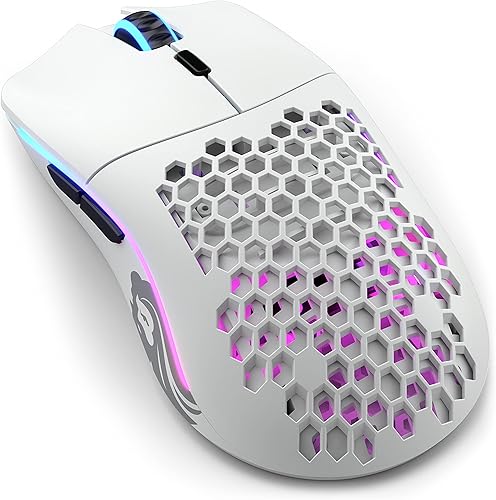
Glorious Model O
Best honeycomb · 67gThe original lightweight icon, and still a bargain. If you don't mind holes — and the dust that finds them — it's one of the cheapest routes to a sub-70g mouse with a cable that genuinely disappears.
- 67g classic honeycomb
- Superb flexible cable — feels near-wireless
- Great glide feet
- Cheap for the weight
- Holes collect dust and divide opinion
- Shell flexes under a hard grip
- Wired
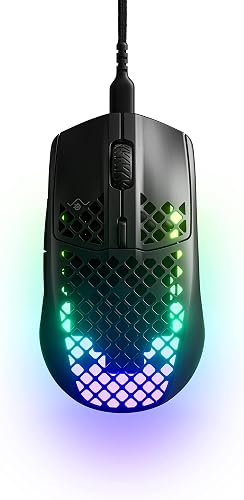
SteelSeries Aerox 3 Wireless
Toughest lightweight · ~68gHoneycomb mice are usually fragile; this one shrugs off spills and dust thanks to IP54 sealing. The lightweight pick if you're hard on your gear or eat at your desk.
- ~68g honeycomb but IP54 water/dust resistant
- Dual wireless (2.4GHz + Bluetooth)
- Bright RGB
- Light for a wireless mouse
- Holes not for everyone
- Sensor good but not elite
- Small shell
Lightweight gaming mice compared
| Mouse | Weight | Shell | Connection | Best for |
|---|---|---|---|---|
| Razer Viper V3 Pro | ~54g | Solid | Wireless | Lightest flagship |
| G Pro X Superlight 2 | 60g | Solid | Wireless | Best all-round |
| Model O 2 Pro | ~55g | Solid | Wireless | Best value flyweight |
| Razer Viper Mini | 61g | Solid | Wired | Lightest budget |
| DeathAdder V3 Pro | ~63g | Solid | Wireless | Lightest ergonomic |
| Endgame Gear XM2we | ~63g | Solid | Wireless (AA) | Enthusiast favourite |
| Glorious Model O | ~67g | Honeycomb | Wired | Best honeycomb |
| Aerox 3 Wireless | ~68g | Honeycomb (IP54) | Wireless | Toughest lightweight |
Does weight actually matter?
Yes — more than any other spec you can buy. Here's how the ranges shake out in practice:
- Under ~65g: ideal for competitive FPS. Flicks are faster and micro-adjustments cost less effort. This is where the flyweights live.
- 65–80g: the sweet spot for most people — light enough to feel quick, heavy enough to feel planted for tracking.
- 80g+: perfectly fine for MMO, MOBA and everyday use, where you're not making rapid flicks and a bit of mass adds stability.
Past roughly 60g, lighter stops being automatically "better" and becomes preference — some players genuinely like a little weight for smooth, deliberate tracking. Don't chase the lowest number for its own sake.
Holes vs solid shell
Honeycomb was how mice got light in 2020. In 2026 the best flyweights are solid — same weight, no dust, no flex, no cleaning holes with a toothpick. Only buy honeycomb if it's meaningfully cheaper (the Model O) or you genuinely like the look.
Don't forget the cable
A stiff cable can add more felt drag than 10g of extra mouse weight — it tugs at your hand as you move. That's why wireless has become the default for lightweight mice: a good dongle removes the drag entirely. If you go wired, a flexible paracord cable (like the Model O's) matters as much as the number on the box; a stiff rubber cable will undo some of the benefit of a light shell.
Shape and grip still come first
Even the lightest mouse is uncomfortable if it doesn't fit your grip. Flat symmetrical shells (Viper, Superlight, Model O) suit claw and fingertip; the DeathAdder's ergonomic hump suits palm. Get the shape right first, then optimise for weight within that.
Once it arrives, feel the difference on the aim trainer and match your old feel exactly with the sensitivity converter so the lighter mouse doesn't throw off your muscle memory.
FAQ
Is a lighter mouse actually better? For aiming, generally yes — less mass means faster direction changes and less fatigue over long sessions. Past roughly 60g it becomes preference: some players like a little weight for stability on slow, precise tracking. The jump from ~90g down to ~60g is the one almost everyone feels.
Are honeycomb mice fragile? The build-quality worry is mostly a myth, but the holes do let in dust and skin oil, and some shells flex under a hard grip. Solid-shell flyweights now hit the same weights without any of that, which is why honeycomb has become optional rather than necessary.
What's the lightest gaming mouse? Around 54g for a mainstream flagship (the Razer Viper V3 Pro). Boutique brands go a little lower, but you typically sacrifice support, sensor quality or durability to get there — not a trade most players should make.
Does weight affect click speed? Indirectly — a lighter mouse is easier to keep steady while you tense your hand to click fast, which helps techniques like jitter and butterfly clicking. Try it yourself on the click speed test and the jitter test.
Is lightweight worth it for casual gaming? It's a nice comfort upgrade even if you're not competitive — less wrist fatigue over a long session is worth something. But if you mostly play slower games, don't stress about grams; shape and comfort matter more for you than shaving weight.
Enough reading — how fast can you actually click?
Take the click speed test